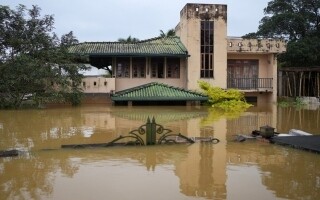
A recent study found that mortality from diseases such as diabetes and kidney disease increases after such storms. In this case, the models did not replicate the events well, as natural fluctuations in ocean temperatures were complex factors. A recent study found that mortality from diseases like diabetes and kidney disease increases after such severe storms. Additionally, many people lost their homes and livelihoods, with the poorest being the most affected. Dr. Sarah Kew, lead author of the study from the Royal Netherlands Meteorological Institute, stated: "The combination of seasonal rains and climate change is a deadly mix." She explained: "Seasonal rains are normal in this part of the world. They often cause some flooding, but scientists were clear: this is 'not natural.'" In Sri Lanka, some floods reached the second floors of buildings, while on the Indonesian island of Sumatra, floods were exacerbated by the destruction of forests that had previously slowed the flow of rainwater from the hills. Millions of people were affected when Cyclone "Ditwa" hit Sri Lanka, Cyclone "Sinyar" hit Sumatra, and the Malay Peninsula at the end of last November. These events became some of the deadliest weather-related disasters in modern history. A study by 'World Weather Attribution,' a coalition of climate scientists, found that the intensity of heavy rainfall over five days in the area affected by Cyclone "Sinyar" increased by 28% to 160% due to human-caused global warming. However, analysis of weather data and ocean temperature measurements led scientists to conclude that 'global warming' may have intensified the heavy rainfall from the cyclones. "What is unnatural is the increasing intensity of these storms," The Guardian reported. Professor Lalith Rajapaksa from the University of Moratuwa in Sri Lanka, who participated in the study, said: "Cyclones like 'Ditwa' have become a new worrying reality for Sri Lanka and the South and Southeast Asian region in general, causing unprecedented rainfall, extensive loss of life, and significant disruption to economic activities." He added: "Flooding is very common for us every year during the rainy season; we expect flooding, up to a maximum of about one to two feet." Rajapakse continued: "But what happened this time is that the water exceeded 14 to 15 feet in some areas." Scientists agree that the climate crisis, caused by burning fossil fuels, is making rainfall more intense and severe in many parts of the world. Warmer air can hold more moisture, leading to heavier rains. In this study, researchers examined weather records to assess how periods of heavy rainfall have changed with a 1.3°C rise in the planet's temperature, as seen today, and found a significant increase in their intensity. The estimates range from 28% to 160% in the area affected by Cyclone "Sinyar" due to the use of different sets of atmospheric data. Climate models are used in these studies to estimate the likelihood of extreme weather events due to global warming. Scientists said the climate crisis has intensified the deadly storms that killed more than 1,750 people in Asia, increasing the intensity of heavy rains and exacerbating floods. In Sri Lanka, periods of heavy rainfall are now 9% to 50% more intense.